The keto diet: the complete beginner's guide
You have heard about keto everywhere but do not know where to begin? Here is exactly how to start in 7 days -- no complicated calculations, no hunger.
What is the keto diet?
The ketogenic diet (or "keto") is a very low-carb, high-healthy-fat eating plan. When you cut out sugar and starchy foods, your body runs out of glucose for fuel. It then switches to a state called ketosis: it burns fat as its primary energy source. The result: you lose weight, often without feeling hungry.
Keto macros to follow
| Nutrient | Percentage of calories |
|---|---|
| Fat | 70-75% |
| Protein | 20-25% |
| Carbohydrates | 5-10% (max 20-25 g/day) |
10 foods to eat on keto
- Meats: beef, chicken, pork, lamb (pasture-raised when possible)
- Fatty fish: salmon, mackerel, sardines, tuna
- Eggs: the cornerstone of keto, rich in protein and healthy fat
- Cheeses: cheddar, parmesan, brie, camembert (no added carbs)
- Avocados: the gold standard of healthy fats
- Nuts and seeds: almonds, macadamia, chia seeds
- Green vegetables: spinach, zucchini, broccoli, cauliflower
- Olive oil and coconut oil
- Heavy cream and butter
- MCT oil to support the transition into ketosis
5 foods to avoid
- Bread, pasta, rice, grains
- Sugar, honey, agave syrup
- Fruit (except small portions of berries)
- Legumes (lentils, chickpeas)
- Sugary alcohol (beer, rose wine, cocktails)
Keto meal plan -- week one
Monday
- Breakfast: scrambled eggs in butter + avocado
- Lunch: grilled chicken salad with parmesan and olive oil
- Dinner: baked salmon + garlic-sauteed broccoli
Tuesday
- Breakfast: cheese omelet + sliced ham
- Lunch: tuna + homemade mayo + cucumber
- Dinner: steak + buttered spinach
Repeat, varying protein sources throughout the week.
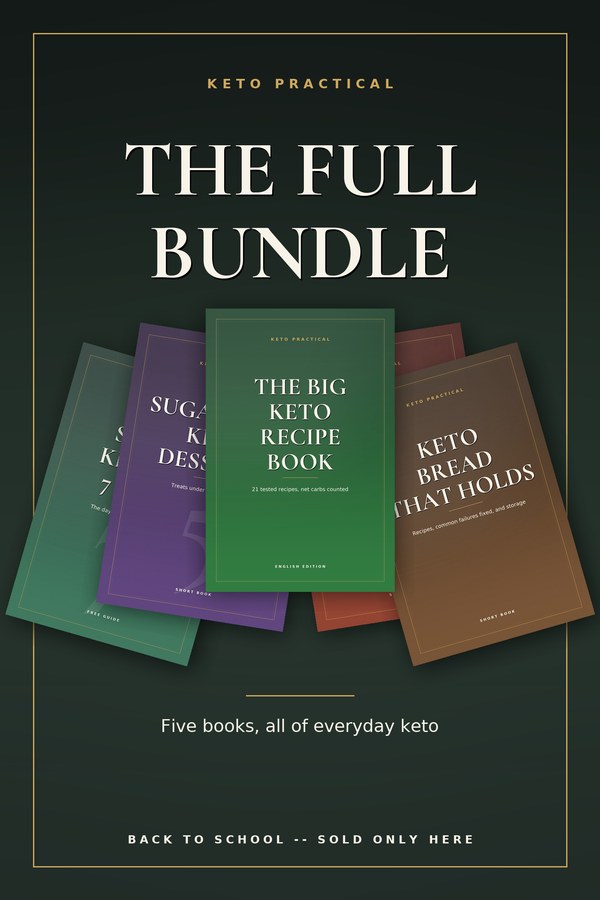
The Full Bundle: 5 keto books
The big recipe book, bread, pizza, desserts and the 7-day starter guide. Instant download, no account needed. Not on Amazon: sold only on our own sites.
- 5 books, 90+ pages
- Save $5.16 versus buying separately
- Instant download
Get the complete keto meal plan
Recipes, shopping lists and carb counts, once a week. Zero spam.
The 3 mistakes beginners make on keto
1. Not drinking enough water
Ketosis causes your body to excrete a lot of water and electrolytes. Drink at least 2.5 liters of water per day and add sea salt to your meals.
2. Being afraid of fat
Many beginners instinctively cut fat. That is the critical mistake: fat is your fuel on keto. Without enough of it, you feel exhausted and give up.
3. Neglecting electrolytes
The keto flu (fatigue, headaches, cramps) happens when sodium, potassium and magnesium run low. A solid electrolyte intake helps you move through that phase more comfortably.
Berberine: support for steady blood sugar
Cutting carbs on keto directly affects blood sugar levels and insulin sensitivity. Berberine is a plant-based compound that has been studied for its role in supporting healthy glucose metabolism -- a natural complement to the dietary changes keto already delivers.
- Plant-based compound
- 60-day money-back guarantee
- Quality tested
How long does it take to enter ketosis?
- 24-48 hours: your glycogen stores begin to deplete
- 3-4 days: you enter light ketosis
- 7-10 days: stable ketosis, actively burning fat
- 4-6 weeks: full fat-adaptation, stable energy, reduced cravings
Results vary from person to person. A ketogenic diet should be tailored to your health status and ideally monitored by a healthcare professional.
What next?
Once you have the foundation in place, two paths come up most often: adapting keto to your hormonal profile after 40, or combining it with intermittent fasting. Read on here:
Hundreds of keto cookbooks, all included.
Hundreds of keto cookbooks included with Kindle Unlimited - 30-day free trial. Read them on any phone, tablet or Kindle.
Start my 30-day free trialFree 30-day trial. Amazon partner link.